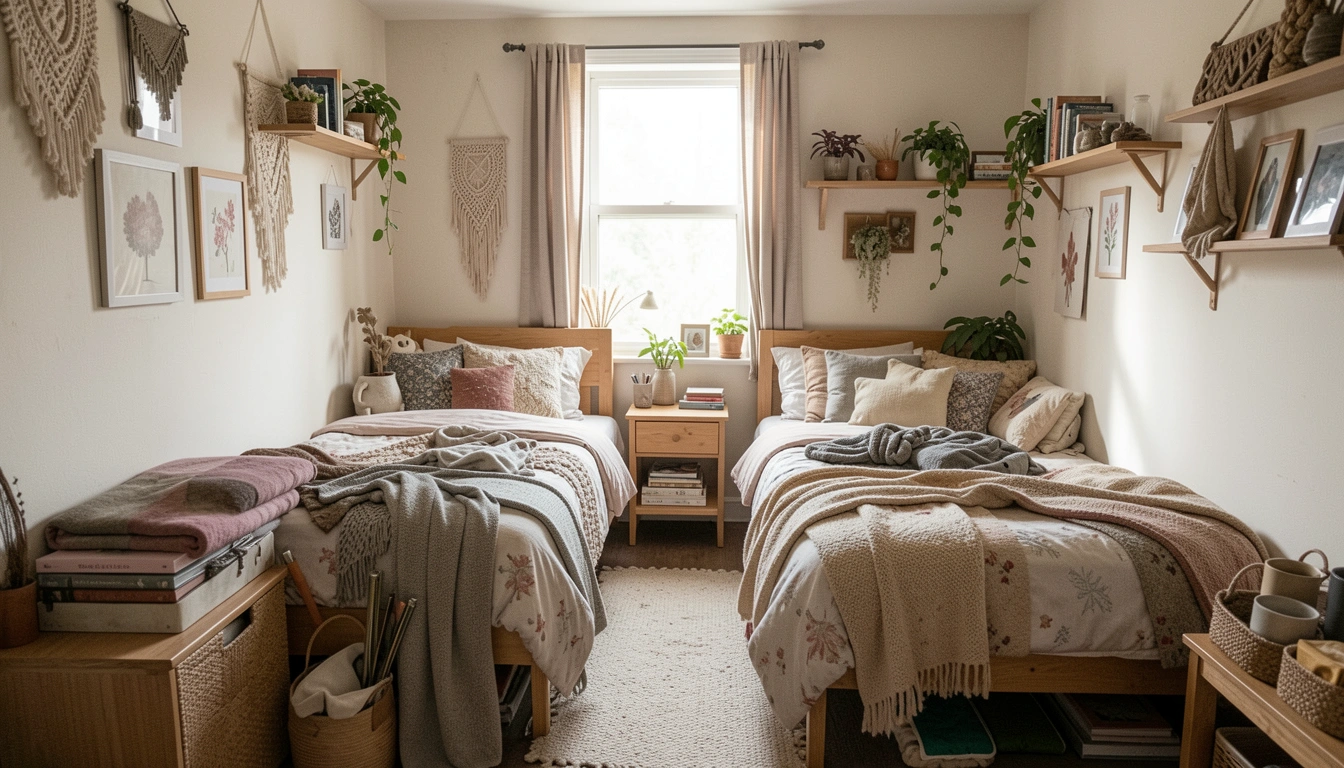
I stared at my spare room last summer. Two twin beds crammed in, paths blocked, clothes spilling everywhere. It felt tight, not cozy. I couldn't even walk straight to the window.
I'd tried pushing them side by side before. That just made a wide barrier. No room to breathe.
One afternoon, I shifted things around. Now it works. Paths clear, beds tucked neat. Here's how.
How To Organize Twin Beds In Tiny Room For A Functional Layout
This guide walks you through placing twin beds so the room flows. You'll end up with clear paths, breathing room, and spots for your stuff. It's simple tweaks I've done in my own tight spaces. The layout feels balanced and easy to live in.
What You’ll Need
- Slim metal twin bed frames, 76-inch length
- Underbed storage bins, 28-quart clear plastic
- Floating wall shelves, 24-inch white wood
- Low-profile area rug, 5×7 feet neutral gray
- Wall-mounted swing-arm lamps, matte black
- Linen twin duvet covers, soft beige
- Slim nightstand baskets, woven seagrass
- Tension rod curtains, light-filtering ivory
Step 1: Clear the Floor and Measure Your Paths
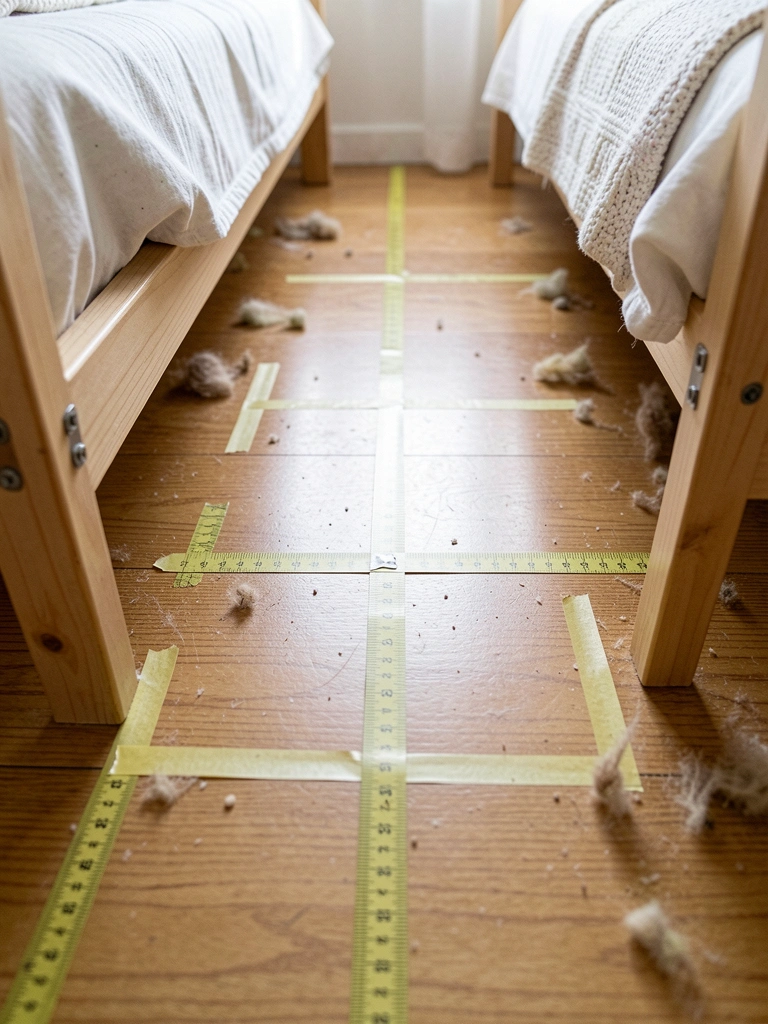
I start by pulling everything out. Beds, boxes, rugs—gone. Then I tape out where paths need to go. At least 24 inches wide between beds and walls.
This opens the room right away. Air moves, light hits the floor. It feels less boxed in.
People miss how paths set the mood. No path, no calm. Avoid centering beds—they eat walkway space.
I step back. See the flow. That's your base.
Step 2: Place Beds in an L-Shape Against Walls
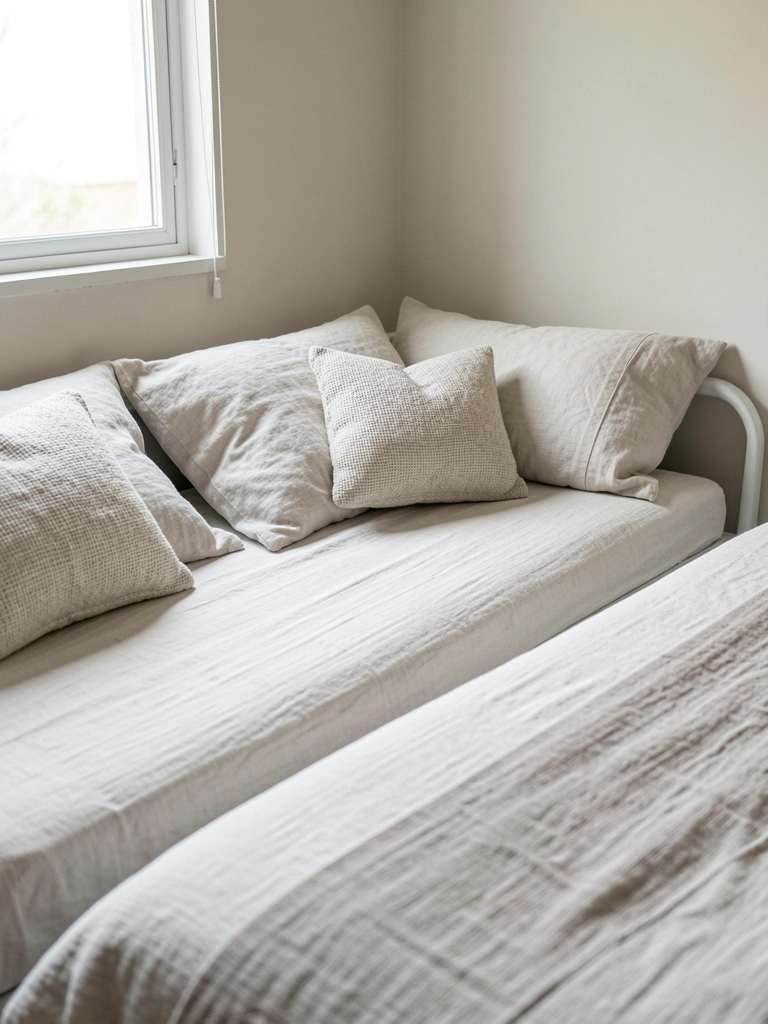
Next, I slide one bed along the longest wall, headboard tight to corner. The second goes perpendicular, under the window if possible. Feet point out.
Visually, corners vanish. Beds hug walls, leaving center free. Room grows.
Insight: L-shape fools the eye into more space. Mistake—parallel beds block light. I tried that once; felt cave-like.
Now paths connect door to window smooth. Sit test it. Feels right.
Step 3: Add Underbed Storage for Hidden Balance
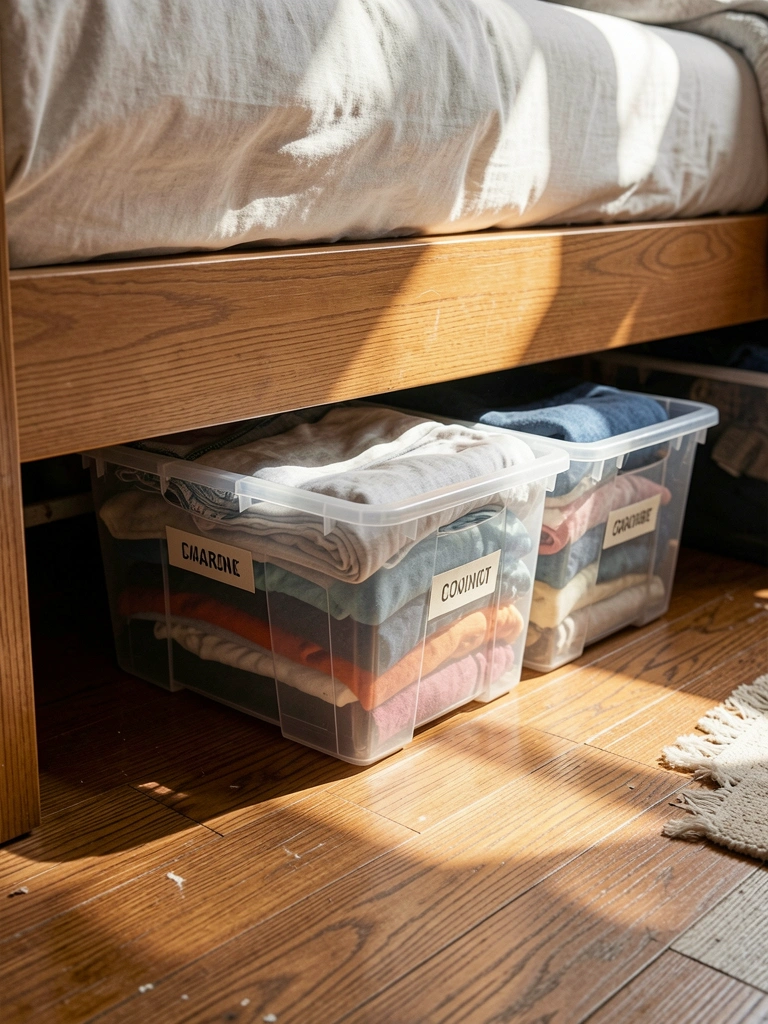
I grab those bins and slide them under. One per bed side, lids easy to lift. Stuff goes in: linens, off-season clothes.
Beds lift off the floor visually. Legs breathe. No clutter piles up.
Most forget storage keeps surfaces clear. Avoid overpacking bins—they stick. Half full works best.
Balance returns. Room holds more without crowding.
Step 4: Layer Rugs and Hang Wall Light
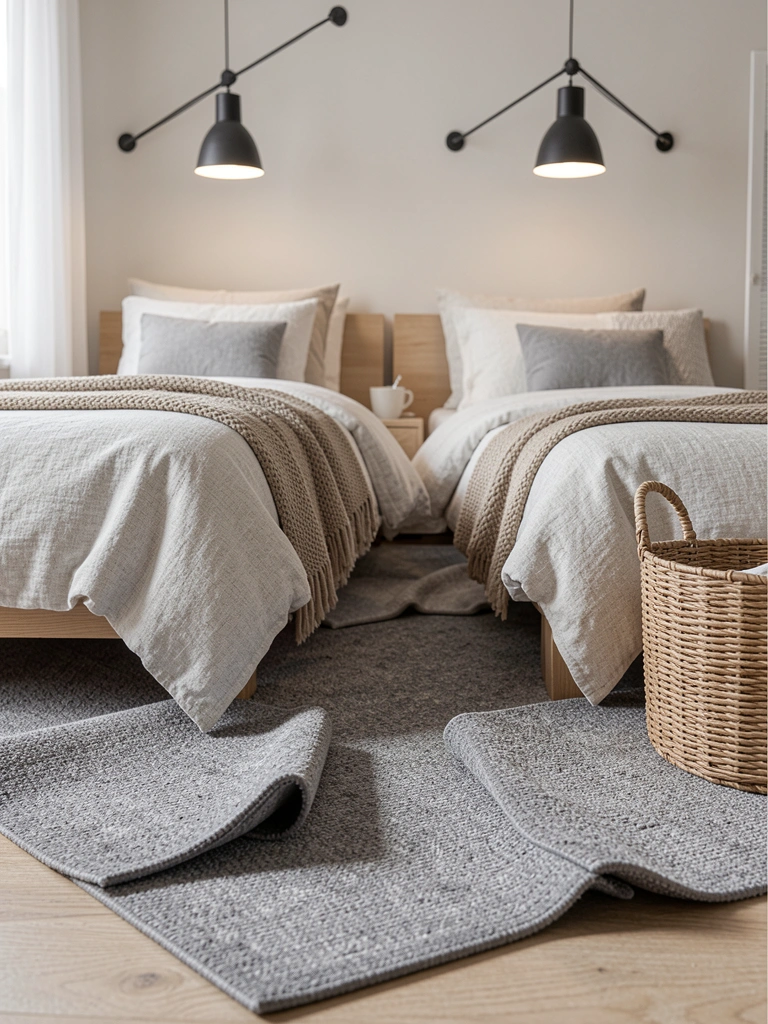
Roll out the rug to anchor beds. Edges under frames, center path clear. Mount lamps high on walls above each headboard.
Floor warms up, beds feel grounded. Light pools soft at night, no cords trailing.
Missed insight: Rug defines zones. Don't stretch it wall-to-wall—traps dust. Lamps save nightstand space.
Paths stay open. Cozy without squeeze.
Step 5: Style Shelves and Soft Goods Last
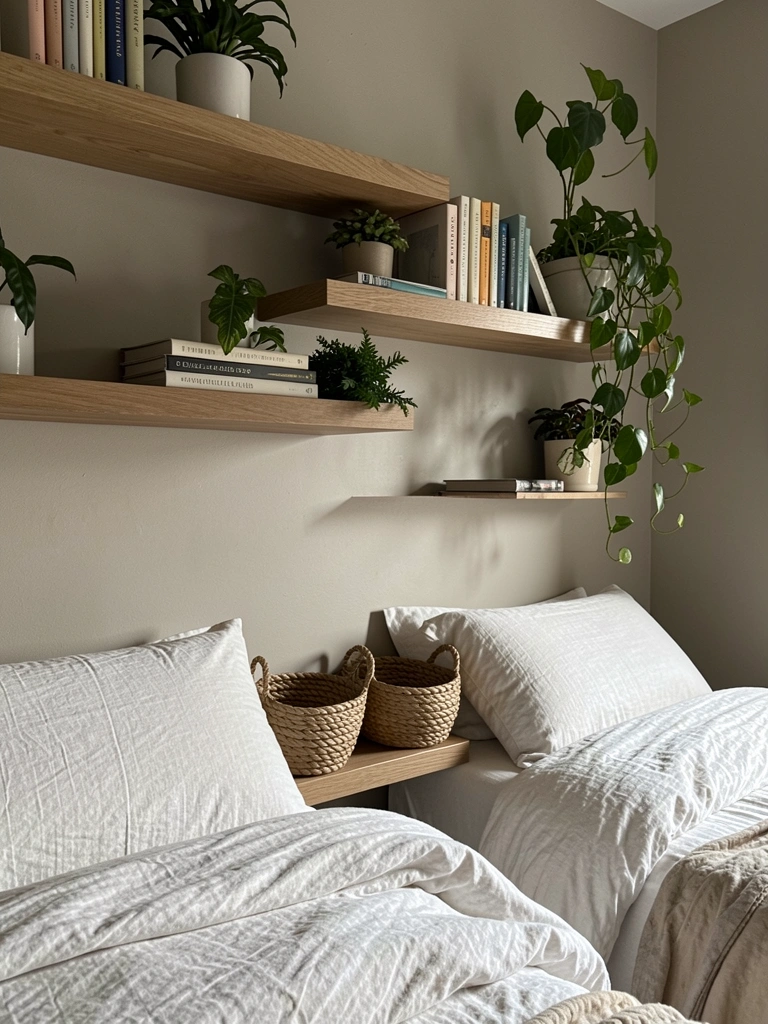
Float shelves over beds for books, a lamp if needed. Drape duvets smooth, add one throw per bed. Baskets catch remotes.
Surfaces stay simple. Walls pull up, not out.
People overload shelves early—blocks air. Avoid symmetry; slight offset feels lived-in.
Step back. Balanced, comfortable. Done.
Handling Shared Use in a Kids' Room
Twin beds in a tiny kids' room mean shared chaos. I keep it simple.
- Personalize one shelf per bed for toys.
- Use matching duvets but mix pillow colors.
- Hang hooks low for backpacks.
Paths stay clear for play. No arguments over space. Feels fair, not forced.
Boosting Storage Without Crowding
Vertical wins in tight spots. I've added these without regret.
- Stack bins two high under beds if frames allow.
- Tension curtains divide if needed, but keep sheer.
- Baskets on shelves hold more than you think.
Test load: Can you reach easy? That's balanced storage.
Quick Refresh for Guests
For visitors, I swap in fresh linens fast.
Sheets crisp, one plant per shelf. Rug vacuumed.
It welcomes without overhaul. Guests linger in the flow, not bump walls.
Final Thoughts
Start with one bed shifted. See how paths open.
You've got this—small moves make it livable.
My room proves it: functional, not fancy. Sleeps two, fits life.
Leave a Reply