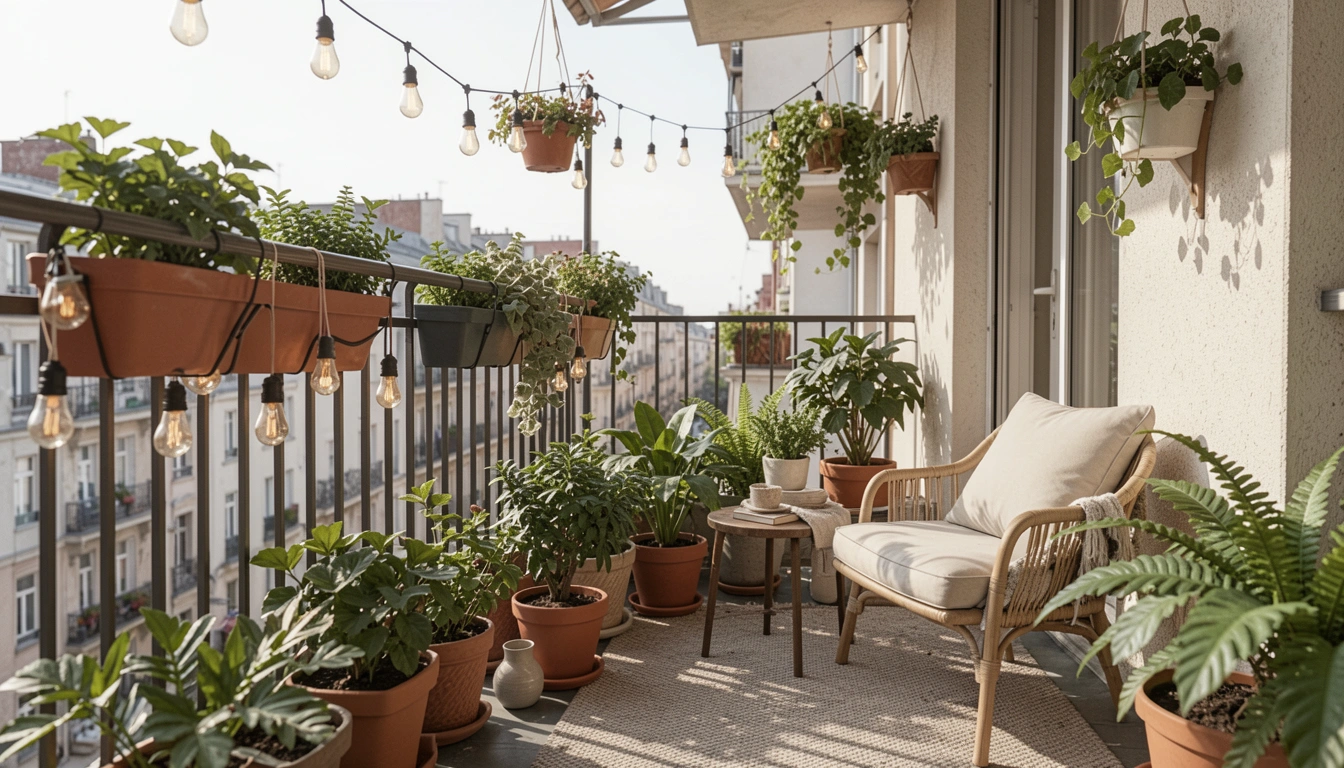
My balcony used to sit dark and empty after sunset. I'd glance out from the living room, feeling like it was just wasted space. Strings of lights tangled in a box, unused.
One evening, I stepped out there alone. The city hummed below, but my spot felt flat. I wanted it to pull me outside, hold a quiet moment.
That's when I started placing lights thoughtfully. Not random hangs, but spots that draw the eye and settle the space.
How To Decorate Balcony With Lights For A Magical Evening
This shows you how I light my balcony so evenings feel warm and balanced. You'll end up with a spot that invites you out every night. It's simple placement I do myself—no fuss.
What You’ll Need
- 20-foot warm white LED string lights
- Solar-powered glass jar lanterns, set of 6
- Battery-operated fairy lights, 10-foot strand
- Outdoor extension cord, 15-foot weatherproof
- Metal shepherd's hook for hanging
- Wicker hanging baskets, pair
- Dimmable smart bulb for table lamp
- Clips for securing string lights
Step 1: Map Your Balcony's Flow
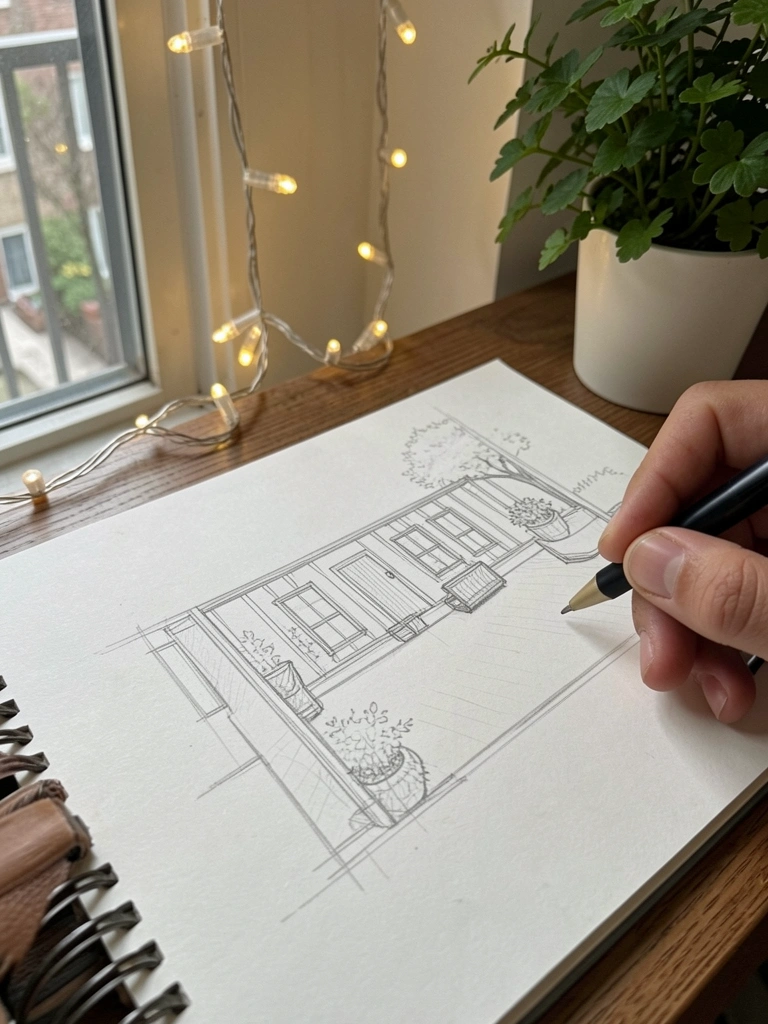
I walk my balcony at dusk first. Note where I sit, where eyes naturally go—like the railing or a chair corner. This sets the frame.
Visually, it shifts from empty to guided. Lights will follow that path, not fight it.
People miss how light pools change the floor's feel—test with phone light. Avoid cramming everything center; it crowds the open air.
I sketch lightly. One line for seating, curves for walks. Now it breathes.
Step 2: Layer Overhead Strings First
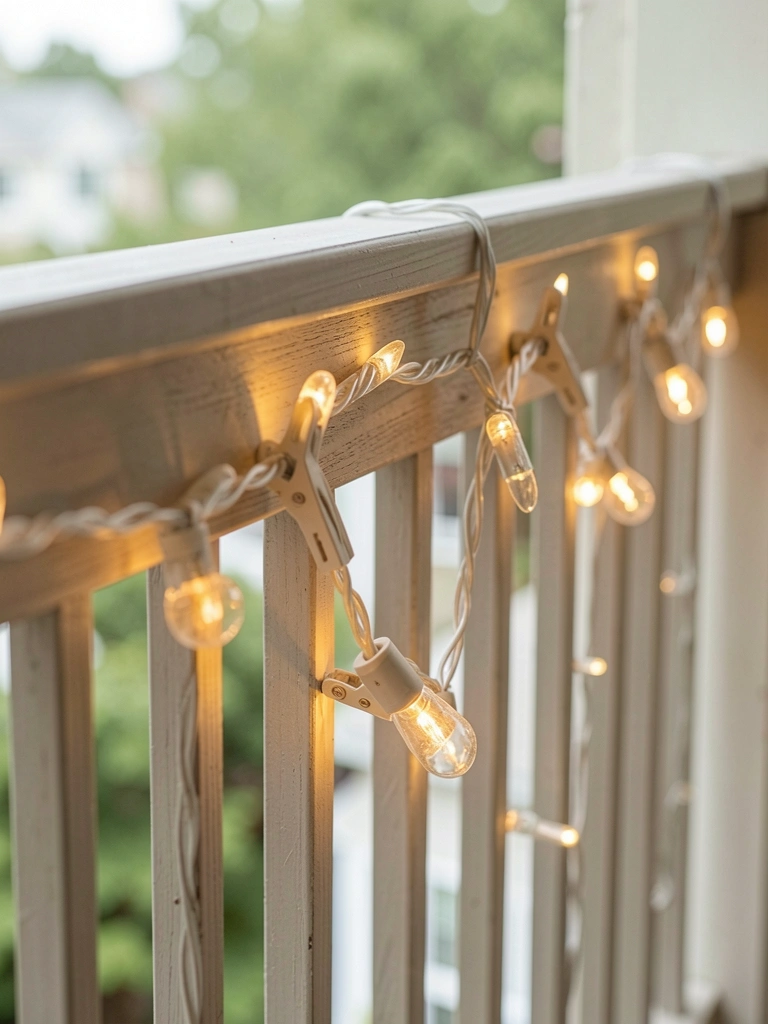
I start with strings along the top rail and ceiling edge. Drape loose, not tight—creates soft arcs.
The space lifts immediately. Shadows soften, pulling the whole area together.
Most overlook height variation; same level flattens it. Skip stretching taut—one tug, and it sags.
From my chair, it frames the view outside. Balanced, not busy.
Step 3: Add Low-Level Glows

Next, I set lanterns and fairy strands low—floor edges, plant bases. Tuck into baskets for hold.
Depth appears now. Light bounces up, warms the legs of chairs.
Folks forget ground level; overhead alone feels top-heavy. Don't overload one spot—spread for even comfort.
It grounds the strings above. Evenings settle in.
Step 4: Accent Key Spots
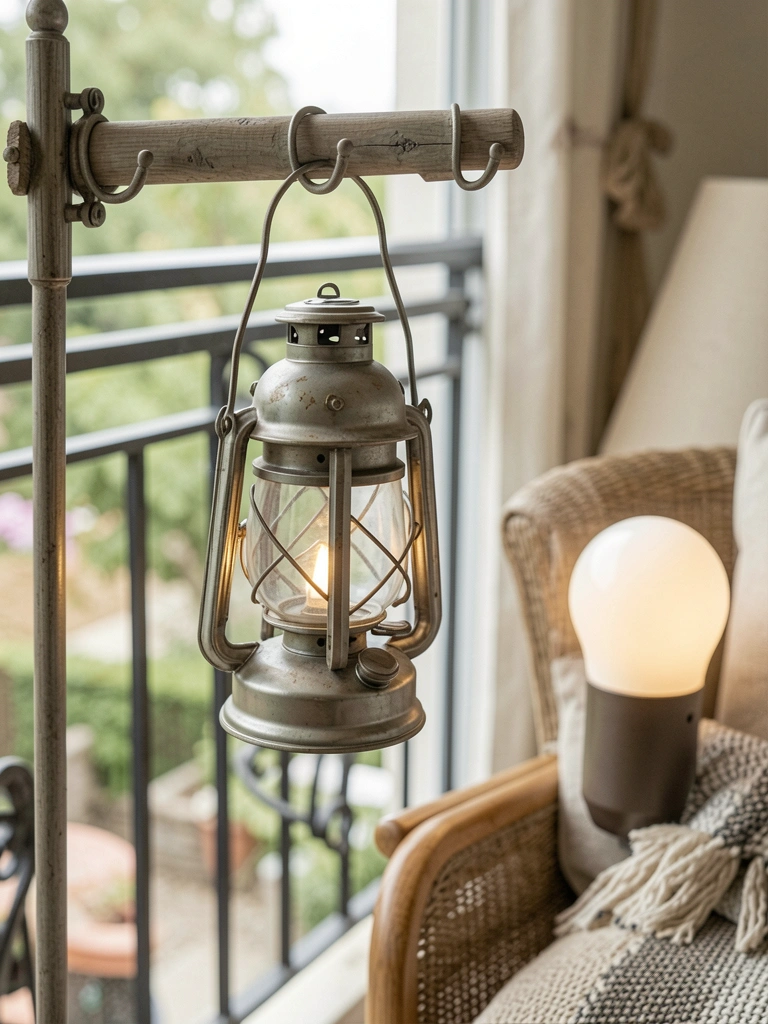
I hang accents where I linger—a hook by the seat, bulb in my lamp. Adjust for face-level glow.
Focal warmth builds. That chair corner calls you now.
The miss: ignoring your habits; lights where you don't sit waste away. Avoid glare—dimmable keeps it soft.
It's personal. Pulls me out every time.
Step 5: Test and Tweak at Dusk
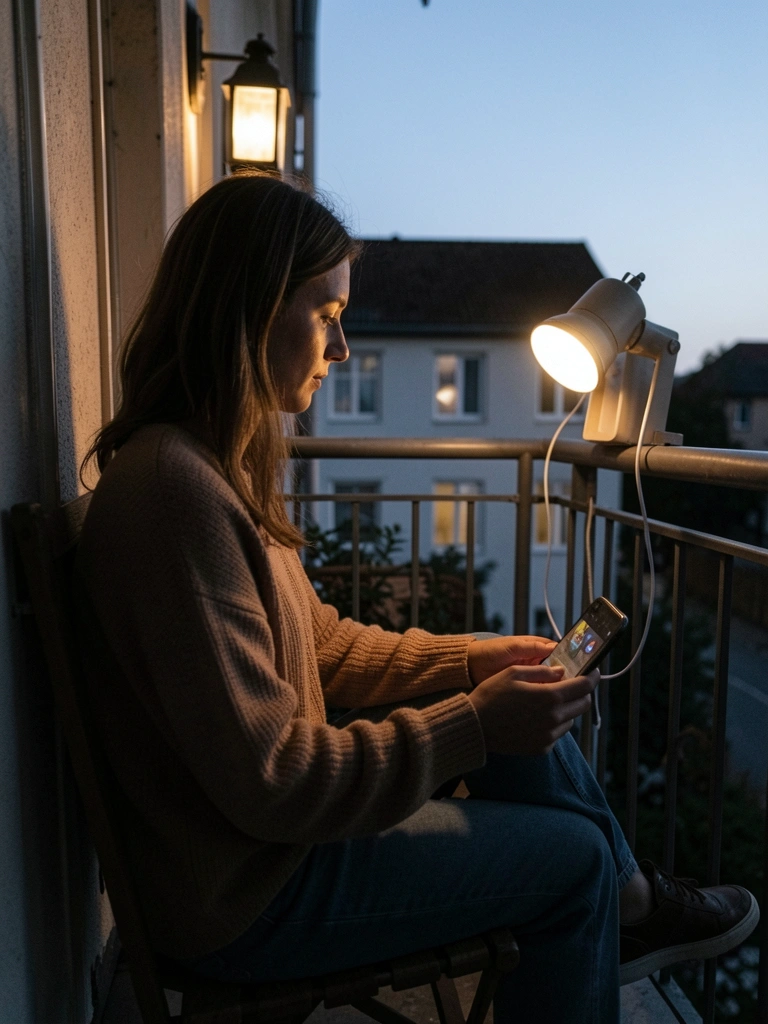
I sit with coffee as light fades. Flip switches, shift what glares or dims spots.
Balance locks in. Flow feels right, no dark holes.
People rush without this—day looks good, night flops. Don't leave cords dangling; neat tucks keep it lived-in.
Now it's mine. Quiet evenings wait.
Common Mistakes I Learned the Hard Way
I strung everything rail-high once. Felt like a tent, closed-in.
- Overhang too low blocks stars.
- One light type washes out colors.
Now I check from inside too. Balance shows everywhere.
Making Lights Work Year-Round
Winter winds test mine. I swap glass for plastic lanterns.
- Secure with clips always.
- Battery backups for outages.
They stay up through seasons. Simple swaps keep the feel.
Pairing Lights with Plants and Seating
Plants catch glow best. I cluster ferns under strings.
Chairs face the light path. No squint.
- Low plants diffuse harsh spots.
- Cushions in warm tones pull it together.
It all holds without trying.
Final Thoughts
Start with one string on the rail. See how it sits.
You've got this—your balcony's shape guides it.
Evenings outside change slow. Just right for you.
Leave a Reply