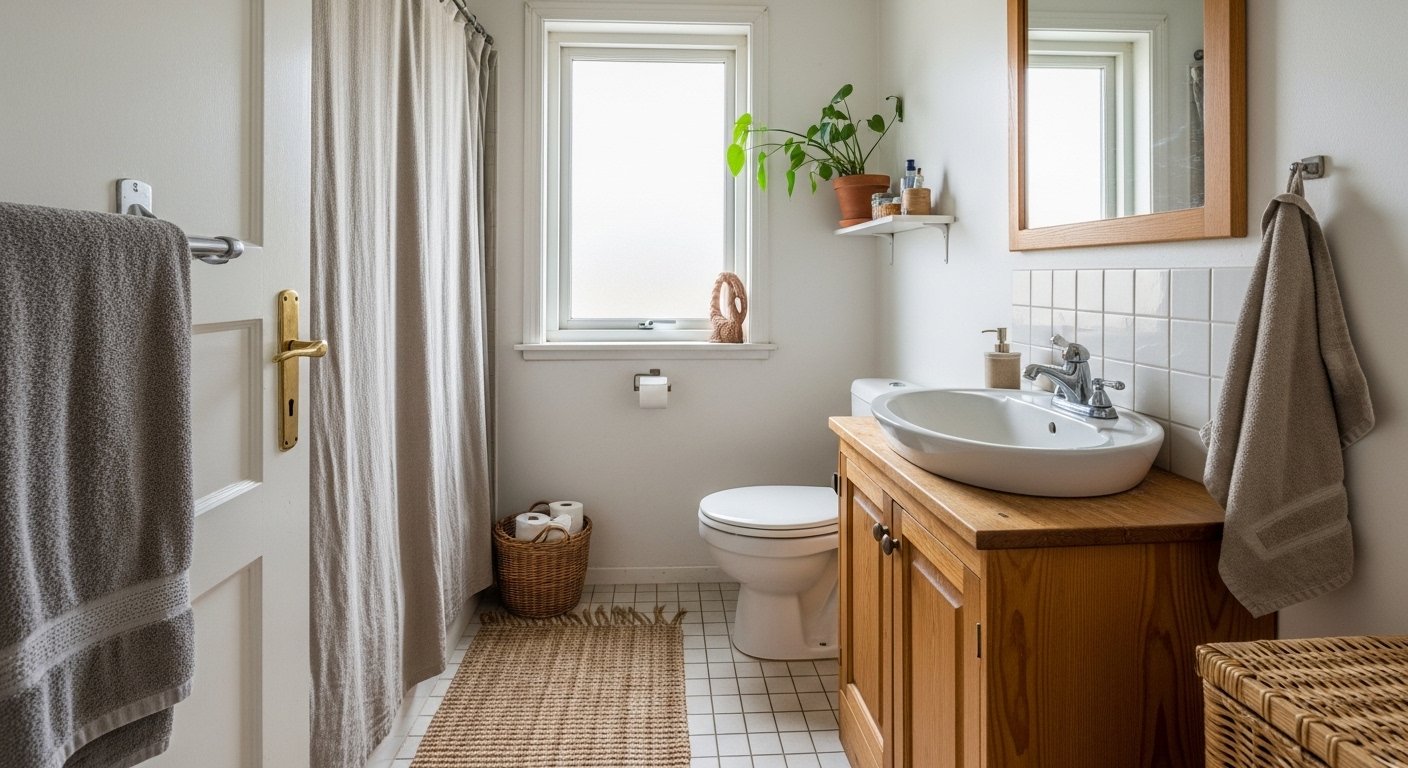
I used to dread getting ready in my tiny bathroom. Counters piled with bottles and a towel on every hook.
It felt claustrophobic, even after a clean. I learned that small choices change the feel more than big ones.
This method is how I quietly thin the clutter and make the room breathe.
How To Declutter A Tiny Bathroom And Make It Feel Spacious
Here I show how to declutter a tiny bathroom so it reads calm and spacious. You’ll get practical edits that change how the space feels, not a long to-do list. It’s doable in short sessions and keeps the room simple and livable.
What You’ll Need
- Clear acrylic shower caddy (2-tier, clear acrylic)
- Small woven seagrass basket (natural, 10-inch)
- Narrow floating shelf (bamboo, 24-inch)
- Brushed brass over-the-door towel hooks (set of 3)
- Matte white ceramic soap dispenser (13 oz)
- Glass apothecary jars with lids (set of 3, clear)
- Slim mirrored medicine cabinet
- Small wooden tray (8×5, dark wood)
Step 1: Clear the Visible Surfaces and Keep Only What You Use
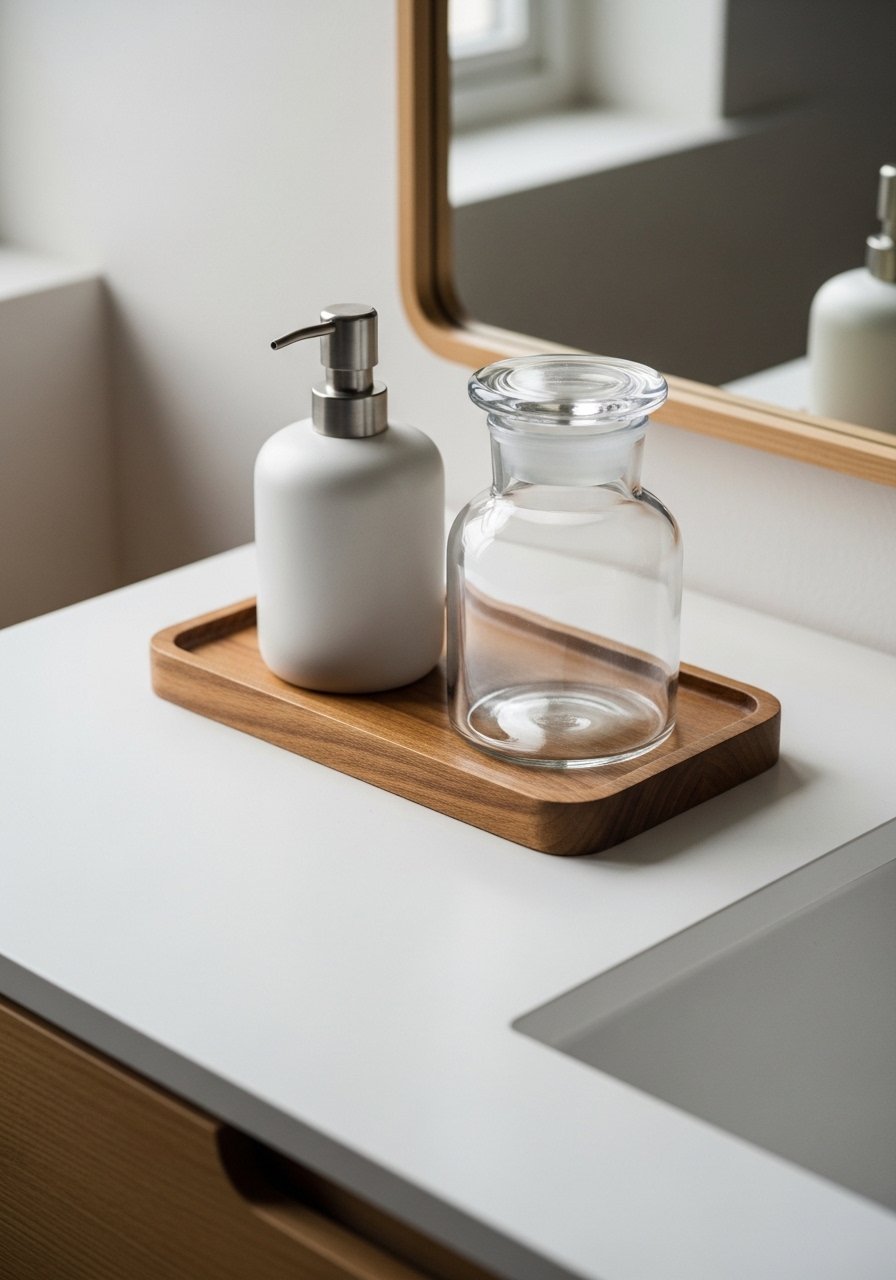
I start by clearing the vanity, windowsill, and shower ledge. I leave out only the items I use daily. This immediately reads calmer. Visually, the room looks larger because my eye has room to rest.
Most people miss that “daily” means seven items or fewer. A small tray keeps those items tidy. Mistake to avoid: hiding everything in a drawer without editing—out of sight clutter still crowds the room in other spots.
Step 2: Contain Like Items for a Clean Look
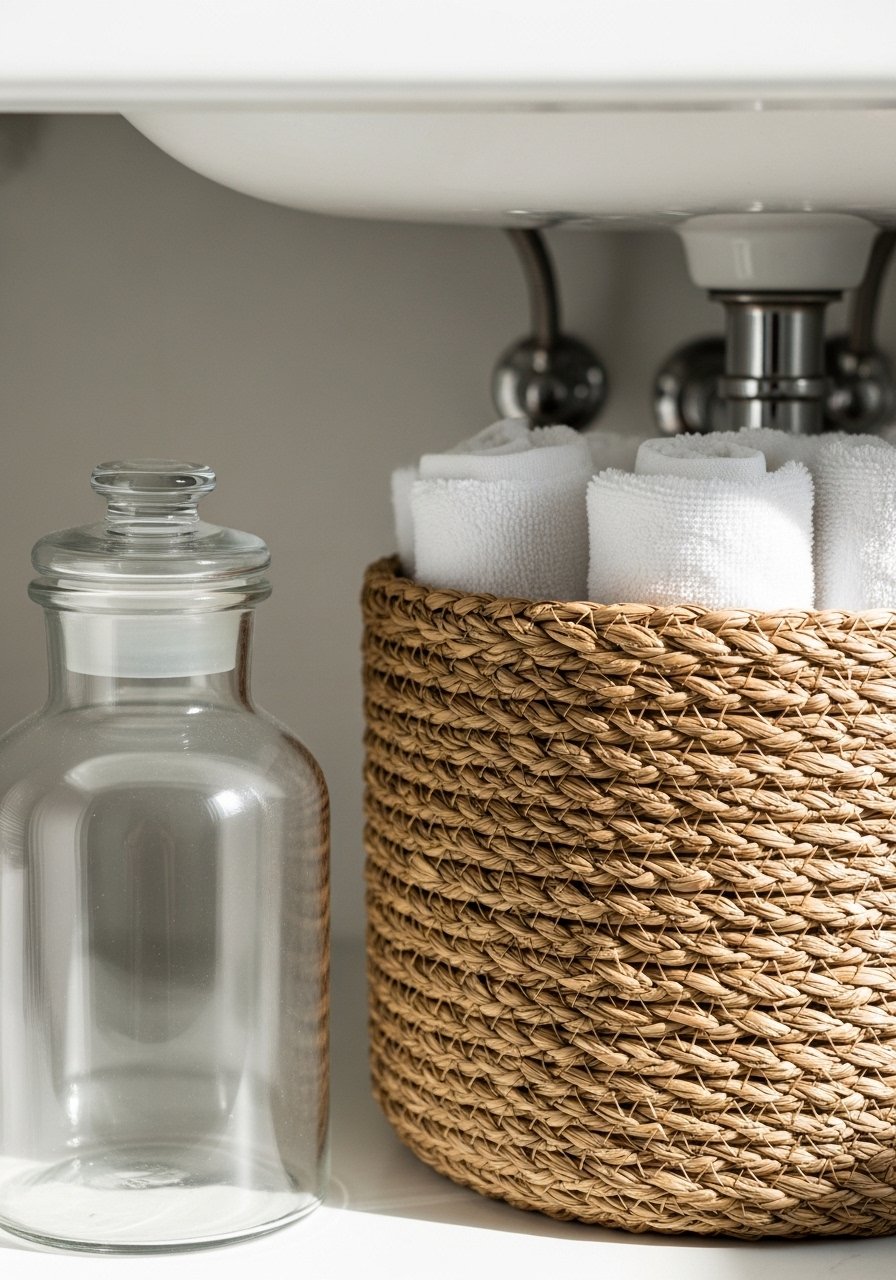
I group similar items into containers. Cotton pads go in one apothecary jar, q-tips in another, and extras live in the seagrass basket. Grouping reduces visual noise and makes the essentials easier to find.
You’ll notice the sink area stops looking busy because the eye reads groups, not many individual pieces. A common miss is using mismatched containers—choose a consistent material palette. Avoid overfilling baskets; that actually looks messier.
Step 3: Use Vertical Space to Free the Floor and Counter
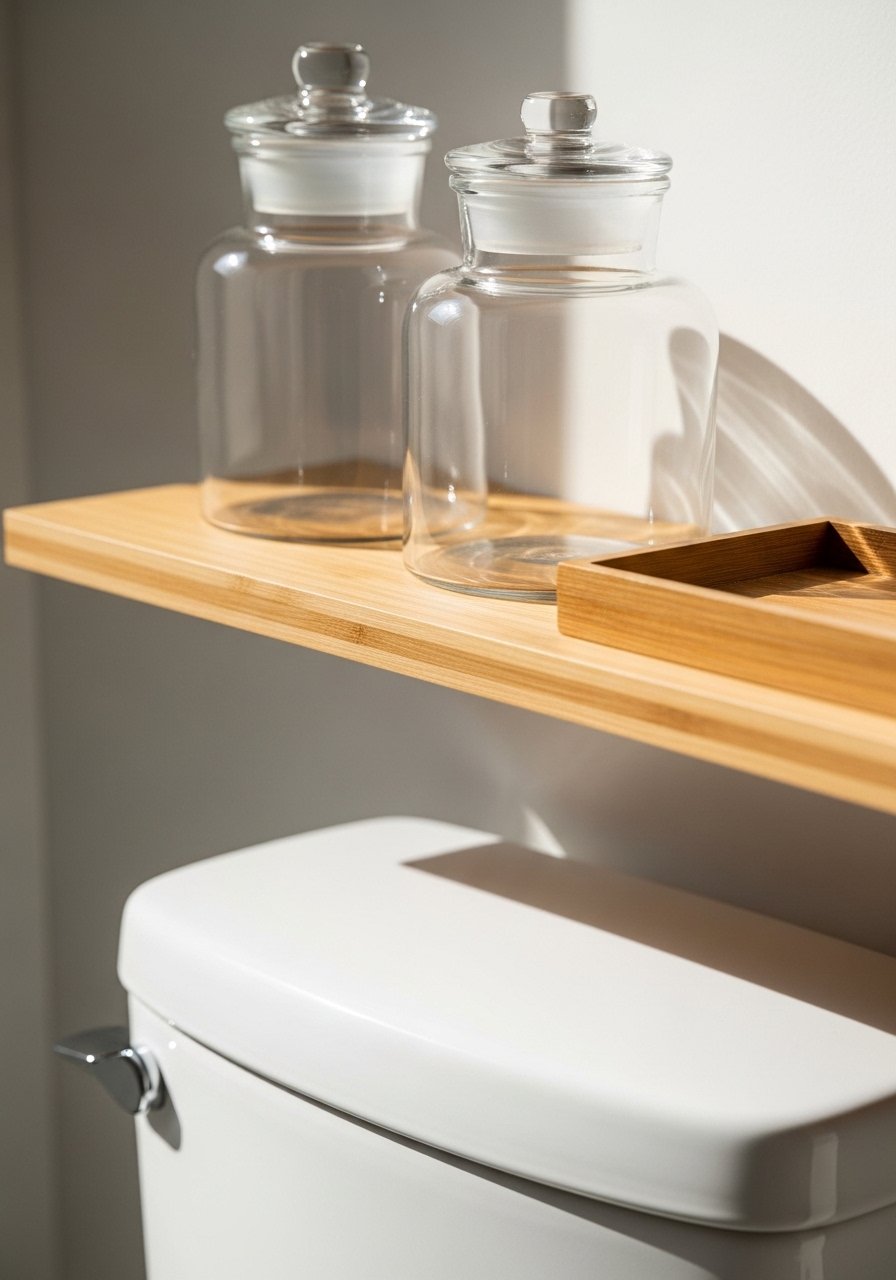
If the counter is small, go up. I install a narrow floating shelf above the toilet and fit the mirrored cabinet where possible. Moving infrequently used items up makes the counter and floor breathe.
The room feels taller and less cluttered when vertical space is used. Many people forget to stagger heights—mix low and tall items so the shelf reads layered, not crowded. Don’t overload the shelf; leave negative space to keep balance.
Step 4: Limit Visible Products and Edit Regularly
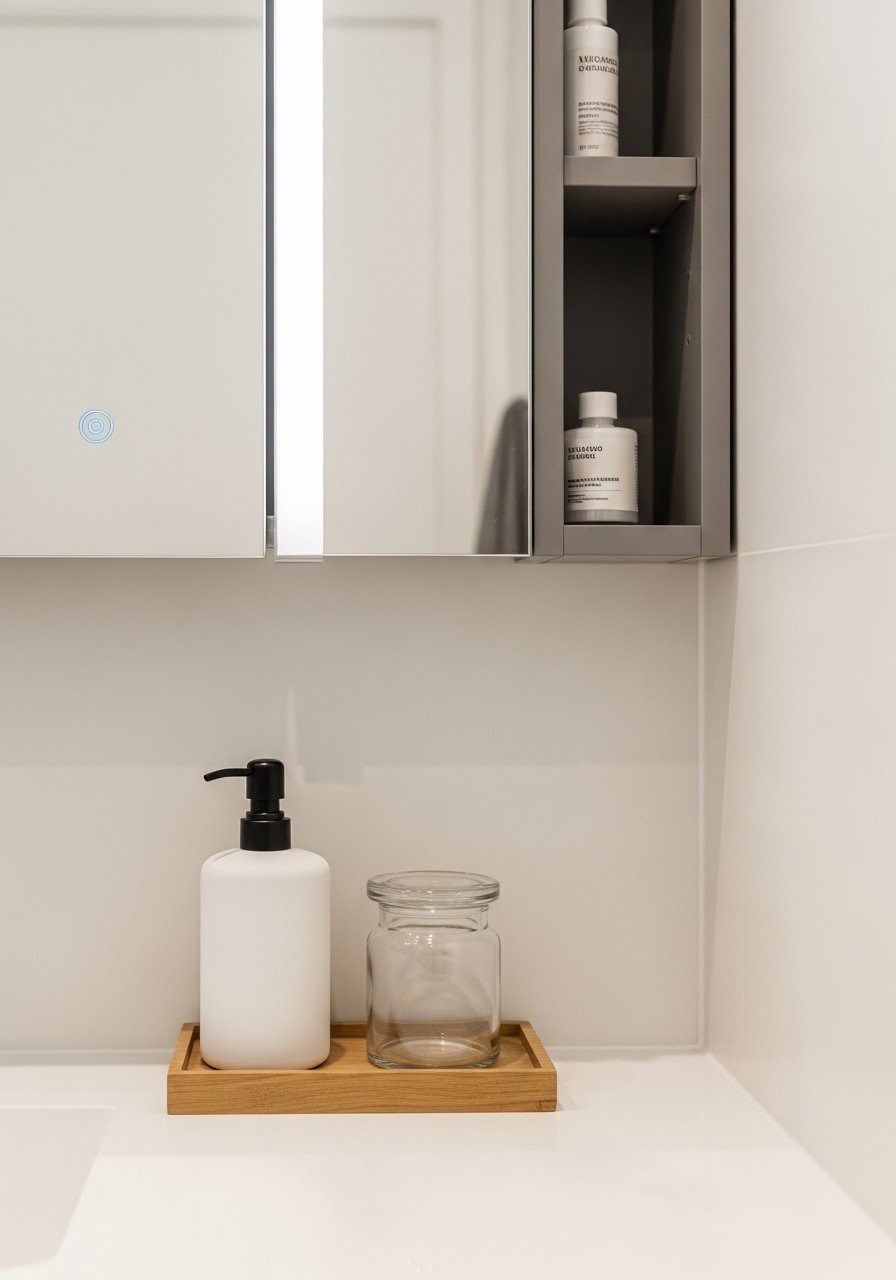
I choose one soap dispenser, one tray, and one small jar for the counter. Everything else goes inside the slim mirrored cabinet or the seagrass basket. Reducing visible product count makes the room feel curated.
A tip people miss: rotate items seasonally rather than displaying everything. Mistake to avoid: thinking “out of sight” equals “out of mind”—I still audit drawers monthly so hidden clutter doesn’t build up.
Step 5: Add Simple Balance and Keep It Lived-In
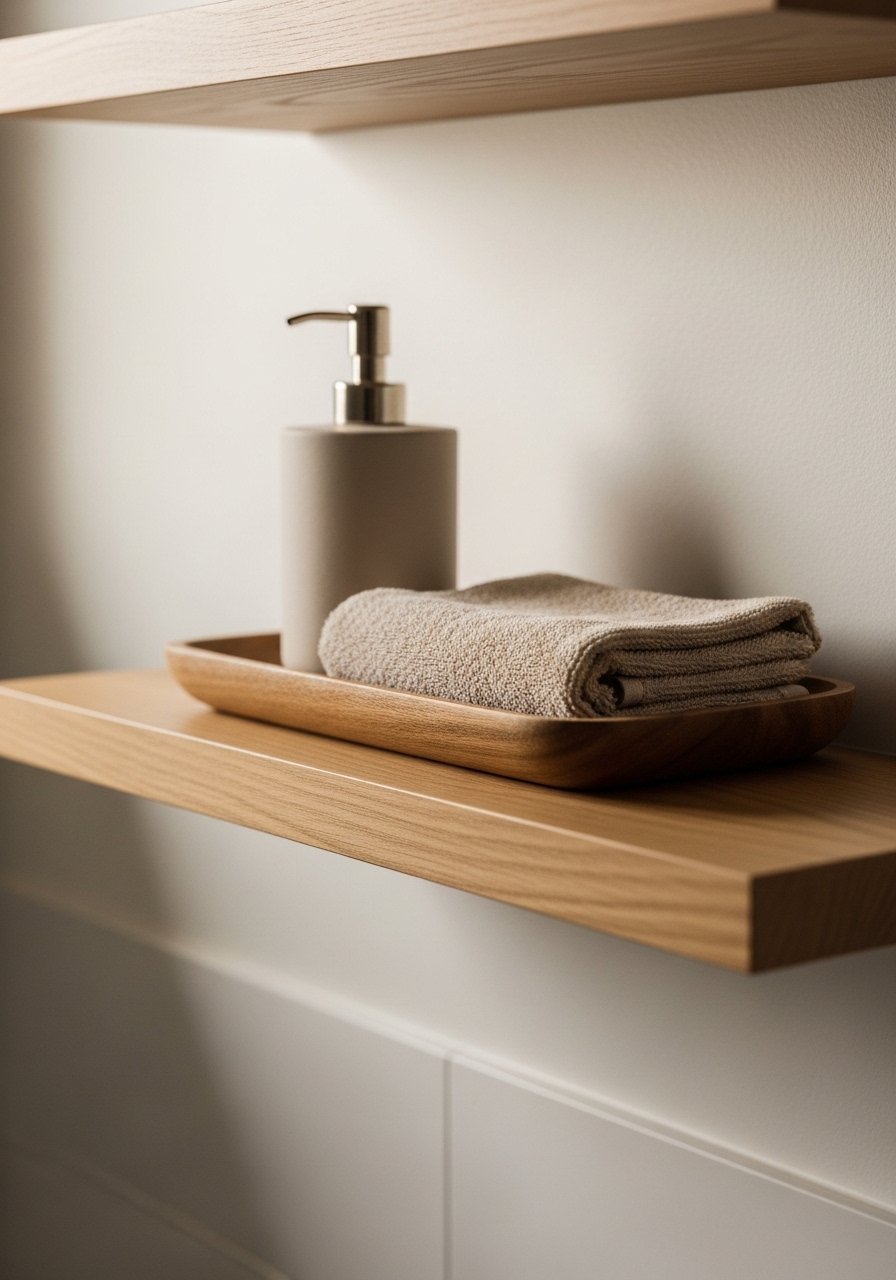
After editing, I tune balance. I place the tray to one side of the sink and a single apothecary jar to the other. The floating shelf holds two clear jars and a folded towel for rhythm. Small asymmetry feels intentional.
People often over-style to “show” a tidy space. I keep a lived-in softness—one folded towel, not a display stack. Avoid making every surface match perfectly; a touch of imperfection keeps the room comfortable.
What This Solves
This method solves the constant countertop overflow and the claustrophobic feel in a tiny bathroom. You’ll stop bumping into bottles and find your routine smoother.
It also keeps the space flexible. A couple of simple containers and a shelf change the room’s mood without a renovation. The result is a calm, usable bathroom you actually enjoy.
Quick Styling Tips
Stick to two materials and two colors so the eye moves easily. I use clear glass and natural fiber, with white and warm wood tones to keep things cohesive.
Leave little breathing room around objects. A single tray or jar with negative space reads cleaner than three tightly grouped items.
Small Maintenance Habits
Spend five minutes after your shower to put one item back where it belongs. I make this a quick habit and it prevents bigger decluttering sessions.
Once a month I reassess what’s inside jars and baskets. If I haven’t used something in three weeks, it goes to an “occasional” box.
Final Thoughts
Start small. Clear one surface, contain one category, then add a shelf. I find quick wins keep me motivated.
You don’t need to buy much. Thoughtful placement and fewer visible things do the heavy lifting.
Do one short edit a week and the room will keep feeling spacious and calm.
Leave a Reply